


How to Fix Electrical Wiring in 5 Simple Steps
How to Fix Electrical Wiring in 5 Simple Steps
Understanding Electrical Wiring Repair
Electrical issues in your home, from flickering lights to power outages, can be daunting. These problems are more than just annoying; they can be serious safety hazards. In fact, electrical problems are the third-leading cause of structure fire. For homeowners in McKinney, TX, understanding electrical wiring repair is about safety, not just convenience. This guide will help you spot common wiring issues, take crucial safety steps, and know when to DIY a fix or call in the experts. Your peace of mind starts with a safe electrical system.
For all your electrical service needs, visit our Electrical Services page, or if you need an immediate solution, contact us for an electrical repair service today.
Here are 5 simple steps for electrical wiring repair:
- Spot the Signs & Prioritize Safety: Look for warning signs like flickering lights, burning smells, or tripped breakers, and always turn off power first.
- Gather Tools & Pinpoint the Problem: Collect essential tools like a voltage tester and wire strippers, then identify the exact location of the wiring issue.
- Perform Basic Wire Repair: Safely cut damaged wire, strip insulation, and make secure connections using wire nuts or heat-shrink tubing.
- Replace Damaged Wire Sections: For more severe damage, carefully replace the entire faulty section of wire, ensuring proper gauge and insulation.
- Know When to Call a Professional: Understand when a repair is too complex or dangerous for DIY and requires the expertise of a licensed electrician.
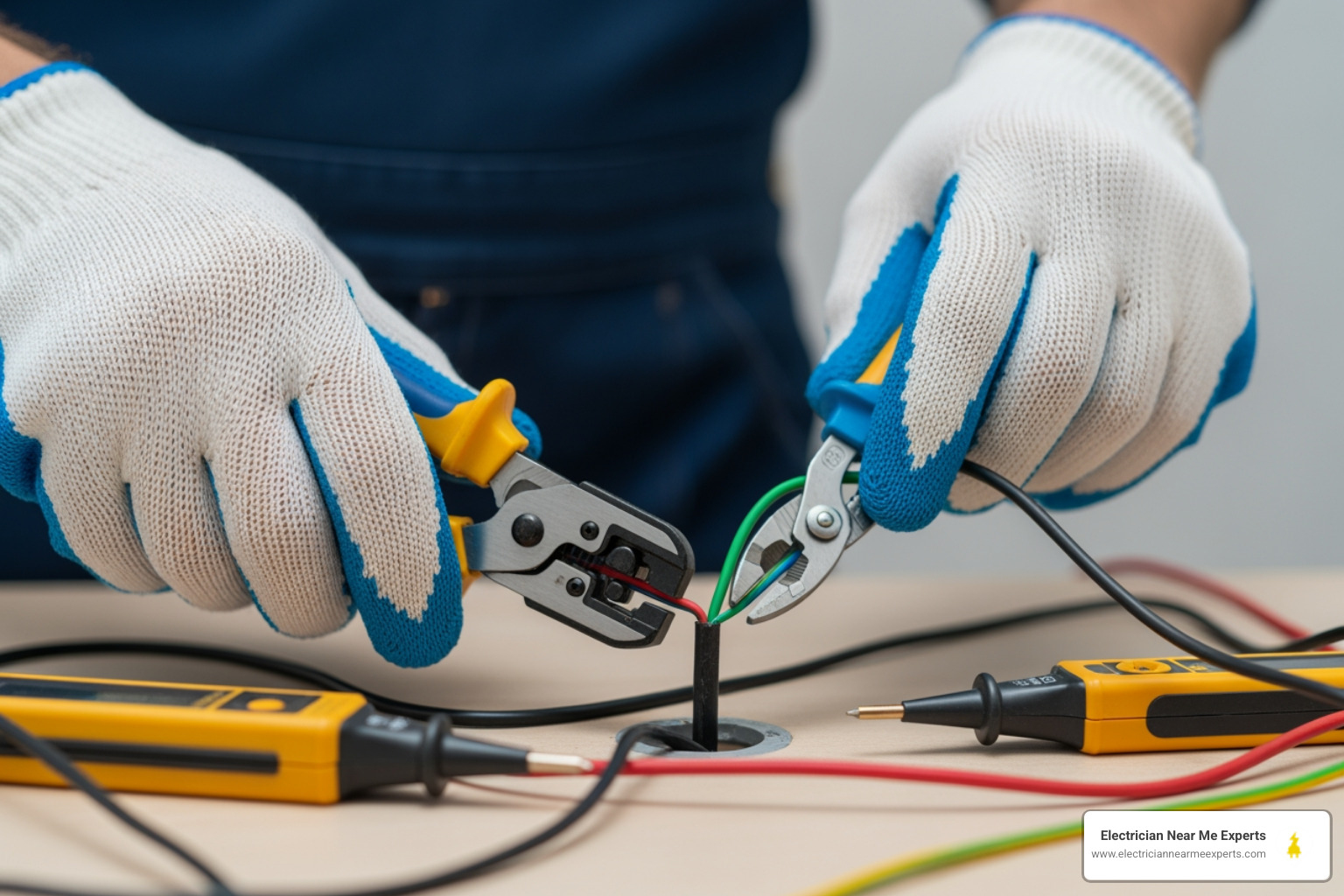
Step 1: Spotting the Signs and Prioritizing Safety
Before touching a wire, the first step in any electrical wiring repair is recognizing the problem and ensuring your safety. Ignoring warning signs can lead to serious consequences like electrical fires and shocks.
What are the Common Signs of Damaged or Faulty Electrical Wiring?
Your home's electrical system will often signal when something is wrong. Learning to spot these clues is the first step in any electrical wiring repair, preventing small problems from becoming major hazards.
Look for these common warning signs. Flickering or dimming lights, especially when you turn on an appliance, could mean loose wiring or an overloaded circuit, a classic sign of Home Electrical Wiring Problems. A strange burning smell from an outlet or switch is a critical red flag for overheating wires that can lead to a fire. Also, check outlets and switch plates for scorch marks or discoloration, which indicate overheating or arcing.
Unexplained buzzing or humming sounds from outlets or your electrical panel can point to loose connections. Frequently tripping circuit breakers or blown fuses mean your system is overloaded or has a wiring fault. An outlet or switch plate that feels warm is another sign of excess heat. The most serious warning is a mild shock or tingling sensation from an appliance or switch; this indicates faulty grounding or exposed wires and requires immediate attention.
A discolored, slightly burnt electrical outlet is a clear warning sign of overheating and potential electrical hazards.
Essential Safety Precautions Before Any Repair
Once you've spotted a sign, prioritize safety. Electrical wiring repair is dangerous if done incorrectly, so don't cut corners.
The golden rule is to turn off the power at the source. Go to your main circuit breaker panel (often in a garage, basement, or utility closet in homes in McKinney, Allen, Plano, and Frisco) and flip the correct breaker to "OFF." For larger jobs, turn off the main breaker. Always verify the power is off with a voltage tester, confirming it works on a live outlet first. This tool ensures no current is flowing.
For extra protection, wear protective gear like insulated gloves and rubber-soled shoes. Always work in a dry environment, as water and electricity are a dangerous combination. Finally, inform others in your home that you're doing electrical work. A note on the circuit breaker panel can prevent someone from accidentally restoring power.
As the experts at WorkSafe remind us, knowing when to safely do it yourself and when to call a pro is key to Safe living with electricity. Your safety, and your family's, is always worth that extra moment of care.
Step 2: Gearing Up and Pinpointing the Problem
With safety covered, it's time for detective work. The right tools and a clear troubleshooting plan will make the repair smoother and save you time.
What Tools and Materials are Necessary for Basic Electrical Wiring Repairs?
Your electrical wiring repair toolkit is essential for success. A non-contact voltage tester is your most important tool for confirming the power is off—never skip this step.
You'll also need wire strippers for clean insulation removal, needle-nose and lineman's pliers for gripping and cutting wires, and a set of insulated screwdrivers (flathead and Phillips) for protection when working with fasteners.
Wire nuts are essential for creating secure connections. Electrical tape is a must-have for insulating them. For superior protection and a professional finish, consider heat-shrink tubing and a heat gun.
A multimeter helps diagnose trickier issues by measuring voltage, current, and resistance. A good flashlight or headlamp is also crucial for safety and visibility in dark spaces.
How Can a Homeowner Identify the Specific Location of a Wiring Problem?
Pinpointing an electrical problem requires a methodical approach. Let's start with a common issue: a dead outlet.
First, check if a wall switch controls the outlet. Next, look for a tripped GFCI outlet, common in kitchens, bathrooms, and outdoor areas in McKinney, Allen, and Frisco. Press the "Reset" button to restore power. If multiple outlets are out, check your main electrical panel for a tripped circuit breaker.
Next, perform a visual inspection with the power off. Look for obvious damage like frayed wires, cuts, or melted insulation. Ensure all connections at outlets, switches, and fixtures are tight.
If a breaker trips, recall which appliances were running. Unplug everything on that circuit, reset the breaker, and plug devices back in one by one. The device that trips the breaker is the culprit.
For complex issues like a suspected short circuit, a multimeter is invaluable. With the power off, use it to check for continuity to find where electricity is taking an unintended path.
Troubleshooting requires patience. If you feel uncertain or can't find the issue, it's a clear signal to contact a professional. Calling for backup is the smart choice for safety.
Steps 3 & 4: A Guide to Basic Electrical Wiring Repair
With the power off and tools ready, let's tackle basic electrical wiring repair. These steps cover fixing isolated damage to a wire section, not a full system overhaul. This is for issues like Fixing Dangerous Burnt Wires and Power Loss in a specific spot.
What are the Steps Involved in Repairing a Damaged Wire Section?
First, cut the damaged wire. Use wire cutters to snip out the faulty part, leaving enough healthy wire on both sides to work with. If the wire is burnt, cut back until you reach undamaged insulation.
Next, strip the insulation. Use wire strippers to remove about 1/2 to 3/4 inch of insulation from the wire ends. Gently twist the exposed copper strands clockwise to keep them tidy.
Now, make secure wire connections. The most common DIY method uses wire nuts. Twist the exposed copper ends together clockwise, then screw on a wire nut until no bare copper is visible. Gently tug the wires to ensure the connection is solid. Wire nuts are the standard for most basic home repairs.
Insulating the connection is vital to prevent shorts and shocks. You can use high-quality electrical tape, wrapping it tightly over the connection and onto the wire's insulation. For superior protection, use heat-shrink tubing. Slide the tubing over the wire before connecting, then position it over the splice and use a heat gun to shrink it for a durable, moisture-resistant seal.
For extensive damage, you may need to replace the damaged wire section entirely. Always match the wire type and gauge (thickness) exactly to prevent overheating. Run the new wire carefully to avoid damage, then connect it to the healthy wiring at both ends using the methods above.
Safely using wire strippers on a cable is a fundamental skill for any electrical wiring repair.
Before flipping the breaker back on, always double-check your connections and insulation. A quick visual inspection can prevent trouble and ensure your repair is safe. While these steps cover many situations, for complex repairs in areas like Plano or Frisco, calling a professional is always the safest bet.
Step 5: Knowing Your Limits - DIY vs. Calling a Professional
While DIY repairs can be empowering, knowing your limits with electricity is crucial. The risks of improper electrical wiring repair are too high to ignore, and some jobs are best left to experts.
Risks Associated with Improper Electrical Wiring Repairs
Attempting an electrical repair beyond your skill level can lead to dangerous situations.
- Fire Hazards: Loose connections, incorrect wire gauges, or poor insulation can cause overheating and arcing, igniting materials in your walls. This makes electrical faults a leading cause of home fires.
- Electrocution Risk: Improperly insulated wires or connections can cause severe or fatal electrical shocks. Even a mild shock is a serious warning.
- Code Violations: All electrical work must follow local building codes and the National Electrical Code (NEC). Improper DIY work can lead to fines, an unsafe home, and issues when selling your property.
- Damage to Appliances and Electronics: Faulty wiring can send incorrect voltage or surges to your electronics, causing irreparable damage.
- Voided Homeowner's Insurance: If damage results from unpermitted or improper DIY electrical work, your homeowner's insurance may not cover the costs.
Simple Fixes You Can Confidently Tackle
Homeowners in McKinney, Allen, and Richardson can safely tackle several basic electrical wiring repair tasks, as long as they follow all safety precautions, especially turning off the power.
You can often confidently handle replacing an outlet if it's worn, loose, or discolored. Just make sure the power is off and connect the wires (hot, neutral, ground) to their correct terminals. Similarly, replacing a light switch is often a straightforward job if you match the type of switch. Many great guides exist for these kinds of easy electrical repairs on switches and outlets. You might also handle minor cord repair, like fixing a cut extension cord or rewiring a lamp plug. For example, if a phone charger has frayed insulation but the copper wire inside is still intact, you could carefully cover it with liquid electrical tape for a quick fix.
Red Flags: When to Call for Professional Electrical Wiring Repair
Some situations are not advisable for DIY repair and require a licensed professional like us at Electrician Near Me Experts. These red flags mean it's time to call for help:
- Working in the Main Electrical Panel: Any work in your main electrical panel beyond resetting a breaker should be left to a professional. This includes replacing breakers, panel upgrades, or fixing hazardous wiring in the main panel - urgent repair required, as it's the heart of your electrical system.
- Aluminum Wiring: Older homes in areas like Garland or Plano may have aluminum wiring (common from 1965-1975). It requires specialized repair methods due to a higher fire risk and is a job for experts.
- Knob-and-Tube Wiring: Found in very old homes, knob-and-tube wiring is outdated, lacks a ground wire, and is a significant safety concern. It usually requires professional replacement or major upgrades.
- Frequent Breaker Trips or Blown Fuses: A consistently tripping circuit isn't just an annoyance; it signals a deeper problem like an overload or a short that a professional must diagnose and fix.
- Arcing Sounds or Burning Odors from Walls: These are urgent signs of severe faults inside your walls. Do not investigate yourself; call an electrician immediately as these are serious fire hazards.
- New Circuit Installation or Major Wiring Changes: Adding new circuits, extending wiring, or making major layout changes (like during a renovation in Prosper or Celina) requires professional expertise and permits to ensure safety and code compliance.
- Any Repair That Makes You Uncomfortable: Most importantly, if you feel uncertain or unsafe at any point, stop immediately and call a licensed electrician. Your safety is always worth it.
We understand the urge to save money by doing things yourself, but for complex electrical issues, the cost of an improper DIY repair (in terms of safety, property damage, or future repair costs) far outweighs the investment in professional service. As the experts always recommend, hire licensed electricians for safe rewiring. Our team at Electrician Near Me Experts serves all these areas, including Addison, Aubrey, Carrollton, Coppell, Farmersville, Frisco, Highland Park, Lewisville, Melissa, Murphy, Oak Point, Parker, Princeton, Sachse, Sherman, The Colony, and Wylie, ensuring your home is safe, efficient, and completely up to code.
Proactive Care: Preventing Future Electrical Issues
Proactive care of your home's electrical system can prevent costly and dangerous electrical wiring repair issues. A few simple steps can keep your system running smoothly and safely for years.
For healthy wiring, schedule regular inspections with a licensed electrician to spot hidden problems. Avoid overloaded circuits by spreading out high-power appliances. A frequently tripping breaker is a clear warning sign. For safety, upgrade outlets from two-prong to grounded three-prong versions and install GFCIs in wet areas. Use proper extension cords rated for your devices and never run them under rugs. Address issues promptly—don't ignore flickering lights or strange smells. Also, keep electrical panels clear of clutter for access and airflow. These tips for maintaining safe wiring in your home can make a huge difference.
Fuses vs. Circuit Breakers: What's the Difference?
Fuses and circuit breakers both protect your home from overloads, but they work differently. Think of it as a single-use vs. a reusable safety device.
Fuses, found in older homes in areas like McKinney or Plano, contain a wire that melts and breaks the circuit during an overload, preventing fire. A blown fuse must be replaced. To do so, turn off the main power and install a new fuse with the exact same amperage rating. Safety with fuses is critical; never use a higher-rated fuse, as this can cause overheating.
Circuit breakers are reusable switches. During an overload, a breaker "trips" to the OFF position. To restore power, flip it back to ON. If a breaker trips repeatedly, it indicates a problem that needs a professional's attention.
Is It Time for a Full Rewire? Key Warning Signs
Sometimes, small electrical wiring repair jobs aren't enough, and your home needs a full electrical rewiring, especially if it's older and not built for modern power demands.
One big clue is your home age over 40 years. If your house is over 40 years old (built before the 1980s), its wiring may be outdated, undersized, or hazardous. Another clear sign is having mostly two-prong outlets, which lack a crucial ground wire. If you're experiencing persistent electrical problems like constant flickering lights, buzzing, or tripping breakers, even after repairs, it often points to a systemic issue a full rewire can solve.
Be especially wary if your home has knob-and-tube or aluminum wiring. These older wiring types are unsafe for modern loads and can complicate getting homeowner's insurance without an upgrade. Finally, planning a major renovation in your McKinney, Frisco, or Allen home is the perfect time to rewire, ensuring the system can handle increased demand. Plus, professional rewiring can significantly increase the real estate value of a home by thousands. For any concerns about a full rewire, especially if your older home needs electrical rewiring, our licensed electricians are here to help. We specialize in Electrical Rewiring Frisco, TX and House Rewire Allen, TX, and can provide a thorough assessment for your peace of mind.
Conclusion
Caring for your home's electrical system is about keeping your family safe. We've covered how to spot warning signs, when you can handle a simple DIY repair, and when it's crucial to call a professional.
Electrical wiring repair demands respect. While a careful homeowner can handle simple fixes like replacing a switch, complex issues require a smart approach. Problems with the main panel, old wiring, or strange sounds from walls are not the time to be a hero.
Electrical problems escalate over time. A minor annoyance can become a serious fire hazard. Your home and family deserve a safe electrical system, not just one that's "good enough."
That's where we come in. At Electrician Near Me Experts, we've built our reputation on providing fast, reliable electrical services throughout McKinney and the surrounding communities—from Addison and Allen to Anna, Aubrey, Carrollton, Celina, Coppell, Farmersville, Frisco, Garland, Highland Park, Lewisville, Little Elm, Melissa, Murphy, Oak Point, Parker, Plano, Princeton, Prosper, Richardson, Sachse, Sherman, The Colony, and Wylie. We bring licensed expertise, upfront pricing, and a genuine commitment to your safety and peace of mind to every single job.
Whether you're dealing with a minor repair or suspect your older home needs a complete rewire, we're here to help. Don't wait for a small problem to become a dangerous one. For reliable and safe electrical services in McKinney and beyond, contact our experts for an electrical repair service today. Your home's electrical system is too important to leave to chance—let's make sure it's done right.
Hear It From Our Customers
We used Electrican Near me and can not say enough great things! They were able to move electricity from ceiling down the wall for 3 sconces! They returned once construction was done and did installation and dimmer switch! Looks amazing!
Michael and Parker were so professional. They installed our Tesla electric charger in no time. I would highly recommend this company!!
They did a great job and were fast and efficient. They even came out the same day to fix my outdoor light fixtures. Would recommend to anyone 10/10!!!
They have helped me throughout several commercial projects. All their work has been very professional and efficient. I will definitely use spider tech on upcoming projects. Highly recommend electrician!
Jonathan and team helped with an emergency electric panel replacement, the price was very fair and the workmanship very good, and friendly communication. I recommend them for any electrical needs you may have.
Great group that did a panel swap at my house. Fantastic communication, excellent quality of work, and (arguably) the best customer service of any company I’ve contracted out for work.
Highly recommend.
We had a great experience with Jonathan. He took the time to explain what's wrong and offer us options that fit our budget, which is great when something unexpected happens. Highly recommend!
They came to replace my smoke alarm. Arrived on time, did excellent job, friendly, and explained what they were doing. Will definitely use again
Ready to Transform Your Home?

Other Blogs


