


How to Repair Electrical Outlets in 6 Easy Steps
How to Repair Electrical Outlets in 6 Easy Steps
Why Electrical Outlet Repair is Important for Your Home
A faulty electrical outlet is more than just an inconvenience; it can be a serious safety hazard. For homeowners and business owners in McKinney, TX, understanding the basics of electrical outlet repair is crucial. These small devices are vital for powering our daily lives, yet they are often overlooked until a problem arises. From annoying dead outlets to dangerous sparks, issues with your electrical system demand attention. Ignoring these signs can lead to bigger problems, including fire hazards and electrical shocks.
For comprehensive electrical solutions, explore our Electrical Services page, or reach out to our experts directly for a Consultation.
Here are common signs that indicate an electrical outlet needs repair or replacement:
- The outlet feels hot to the touch.
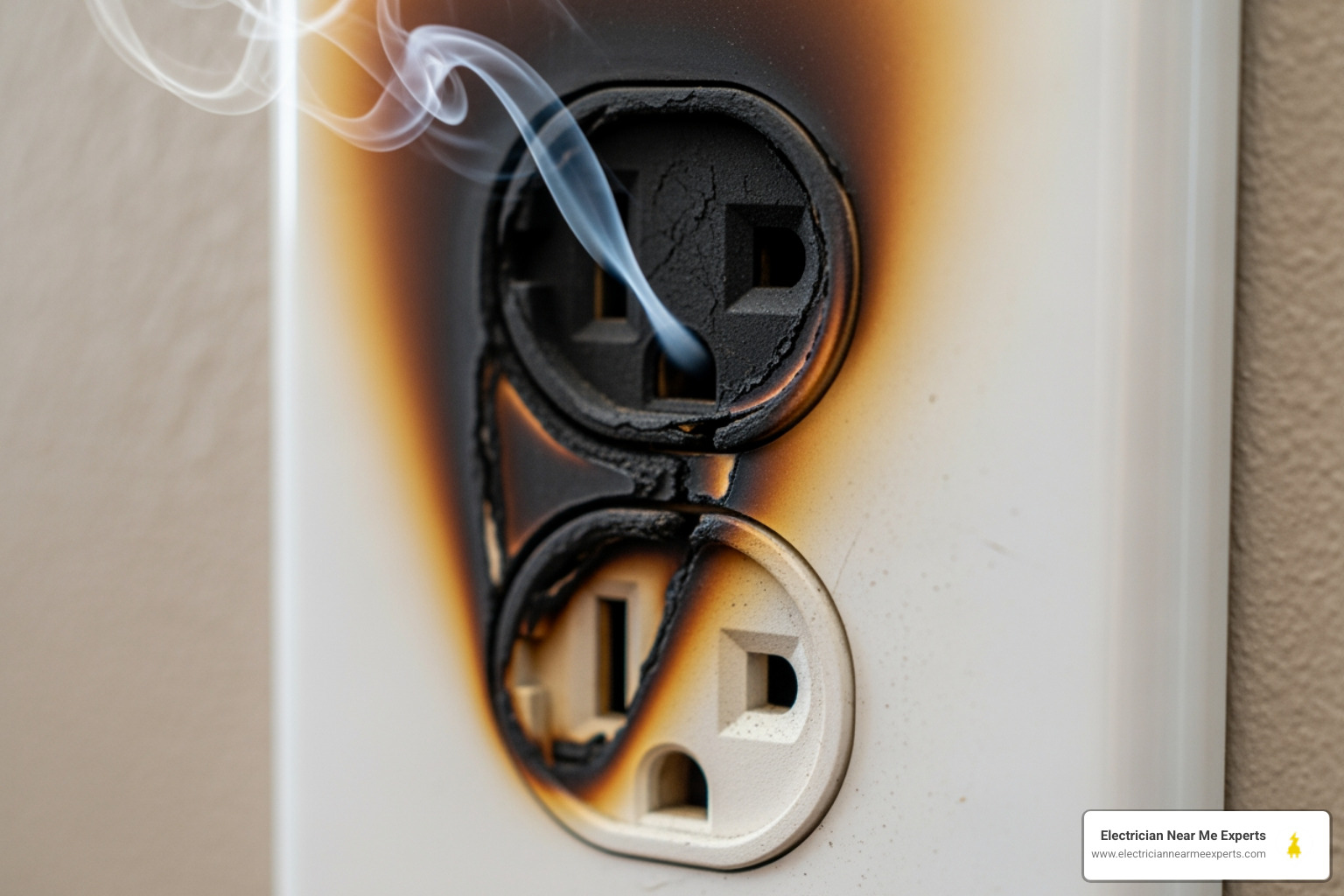
- You notice sparks, smoke, or a burning smell coming from the outlet.
- Plugs frequently fall out of the outlet or don't fit securely.
- The outlet is not providing power to devices (it's "dead").
- The outlet's faceplate is cracked, discolored, or charred.
- There's a buzzing sound coming from the outlet.
- The circuit breaker trips repeatedly when using the outlet.
Ensure your home's safety and functionality by contacting Electrician Near Me Experts for professional electrical outlet repair today.
Signs Your Outlet Needs Repair or Replacement
Ever had that moment when you plug in your phone, and... nothing? Recognizing the early warning signs that an electrical outlet needs attention isn't just about convenience; it's about keeping your home safe. Let's dig into the common indicators that your electrical outlets might be crying out for some electrical outlet repair.
Visual Signs
Keep an eye out for visual cues of distress. A cracked faceplate might seem minor, but it can indicate internal damage. More alarming are scorch marks or discoloration. Any blackening or charring around the outlet is a huge red flag for overheating, a short circuit, or arcing—all serious fire hazards. If your outlet is loose and sinks into the wall when you plug something in, connections can become unstable, leading to dangerous arcing.
Functional Signs
How your outlets function is also a clear indicator of trouble. The most straightforward sign is a dead outlet that provides no power. This could be due to a tripped breaker, a GFCI issue, or worn-out wiring. Another common issue is when plugs fall out or don't fit securely. This usually means the internal contacts are worn out, and the loose connections can cause dangerous arcing and overheating. If you're experiencing intermittent power, it's a clear sign of loose internal wiring or a failing receptacle that needs prompt electrical outlet repair. Issues like flickering lights can also point to a struggling outlet. You can learn more on our page dedicated to Flickering Lights and Dead Outlets.
Sensory Signs
These signs demand immediate attention as they often signal urgent safety risks. If an outlet feels hot to the touch, it's a serious indicator of overheating, often pointing to loose wiring or an overloaded circuit—a significant fire risk. A burning smell from an outlet is even more alarming. If you smell burning plastic, immediately turn off the power to that circuit at your breaker panel, as this is a critical sign of a potential fire. Lastly, a persistent buzzing or crackling sound, or seeing sparks when plugging in a device, signals loose connections, arcing, or internal damage. These sensory signs are severe safety concerns requiring immediate action. For more on urgent electrical safety, please visit our Electrical Safety Urgent Hazards page.
Safety First: Tools and Precautions for Outlet Repair
Before you even think about touching an electrical outlet, let's talk about safety. Electricity is incredibly powerful, and taking the right precautions is the only way to prevent shocks, fires, and other serious injuries.
The Golden Rule: Turn Off the Power
The first, most important step before any electrical outlet repair is to turn off the power at your home's main circuit breaker panel. This panel is usually a gray metal box in a garage, basement, or utility closet. To identify the right breaker, plug a lamp into the outlet you're working on. Then, have someone watch the lamp as you flip breakers one by one. When the lamp goes dark, you've found it. Flip that breaker firmly to the "OFF" position.
The next crucial step is to confirm the power is OFF with a voltage tester. A non-contact voltage tester is easy to use—just hold it near the outlet slots. If it lights up or beeps, there's still power. Stop immediately and find the correct breaker. This step is critical to prevent electrical shock and short circuits while you work.
Essential Tools and Materials Needed
Having the right tools makes the job easier and safer. You will need:
- A non-contact voltage tester
- Screwdrivers (Phillips-head and flat-head), preferably with insulated handles
- Wire strippers/cutters
- Needle-nose pliers
- The correct replacement outlet
- Electrical tape
- Electrical spacers or a box extender for loose outlets
For personal protection, wear safety glasses and insulated gloves. Wearing closed-toe shoes, long pants, and a long-sleeve shirt is also a smart move.
If you feel unsure or uncomfortable with electrical outlet repair, stop and call a professional. For more safety tips, explore our articles on Electrical Safety First Professional Electrical Outlet Solutions and DIY or Die Trying: The Shocking Truth About Electrical Work.
Troubleshooting Common Outlet Problems Before Replacement
Sometimes, an electrical outlet repair issue is surprisingly simple to fix. A little troubleshooting can often resolve the problem, saving you time and hassle.
Diagnosing a Dead Outlet
A dead outlet often points to a few common culprits. The most frequent reason is a tripped circuit breaker. At your main electrical panel, a tripped breaker will be in the "off" or middle position. To reset it, push the switch firmly to "OFF," then back to "ON." If it trips again immediately, there's a persistent fault on the circuit.
Older homes might have a blown fuse. To replace one, turn off the main power, find the fuse with a broken filament or discolored window, and replace it with a new one of the exact same amperage rating. If the new fuse blows, it indicates an underlying issue.
Another common cause, especially in kitchens or bathrooms, is a tripped GFCI outlet. These Ground-Fault Circuit Interrupter outlets prevent shock near water. To reset one, press the "RESET" button. If it doesn't reset or trips again, the GFCI might be faulty. One GFCI can protect several other outlets, so check nearby GFCIs if an outlet is dead. For a complete guide, see our page on Why Your GFCI Outlet Keeps Tripping: How to Reset It & Your Complete Troubleshooting Guide.
If breakers trip frequently, it could be a sign of a more serious problem. Learn more on our Circuit Breaker Failure Warning Signs page.
Fixing a Loose Outlet and Addressing Loose Wires
A loose outlet is a safety concern and a potential fire hazard. When an outlet isn't snug, the connected wires can wiggle loose, causing dangerous arcing and overheating. With the power safely turned off and verified, you can often secure the outlet by tightening the receptacle screws that hold it to the electrical box. If the box is recessed, use electrical spacers or a box extender to bring the outlet flush with the wall. While you're in there, check for any loose wires and re-secure them to their proper terminals. Loose wiring is a common cause of electrical problems and a significant safety concern. Our Home Electrical Wiring Problems blog is a great resource for more details.
Understanding 'Half-Hot' or Switched Outlets
If only one receptacle works, or it requires a wall switch to be on, you've likely found a "half-hot" or switched outlet. This setup is common in living rooms or bedrooms for controlling lamps. If an outlet seems dead, try flipping all the wall switches in the room. Often, only the bottom receptacle is switched, leaving the top one always on. If a switch brings the outlet to life, you've found your simple fix, and no complex electrical outlet repair is needed.
A 6-Step Guide to Electrical Outlet Repair and Replacement
When troubleshooting fails, it's time for a replacement. While we recommend a pro for complex jobs, replacing a standard outlet is straightforward for a confident, safety-minded homeowner.
Steps 1 & 2: Shut Off Power and Remove the Old Outlet
This is where safety precautions are critical.
First, shut off the power at the circuit breaker. If you're unsure which breaker it is, shut off the main breaker for the entire home.
Now, verify the power is off with a non-contact voltage tester. Touch it to the outlet slots; if it beeps or lights up, you have the wrong breaker.
Once you're certain the power is dead, remove the faceplate with a flat-head screwdriver. Then, unscrew the two screws holding the receptacle to the electrical box and gently pull the outlet out. Before touching any wires, take a clear photo of the wiring configuration as a reference guide.
Steps 3 & 4: A Homeowner's Guide to Electrical Outlet Repair Wiring
Modern home wiring uses a simple color-coding system:
- The hot wire is black and carries current from the panel. It connects to the brass-colored screws.
- The neutral wire is white and completes the circuit. It connects to the silver-colored screws.
- The ground wire is bare copper or green. This safety wire connects to the green screw. Learn more about its importance on our page Why is a Ground Wire Important.
After identifying each wire and taking a photo, carefully disconnect the old wires by loosening the terminal screws. If the wire ends are damaged, snip off the bad part and strip about three-quarters of an inch of new insulation.
Choosing the right outlet matters. Most standard outlets are 15 amps (used with 14-gauge wire). A 20-amp circuit uses thicker 12-gauge wire. Never install a 20-amp receptacle on a 15-amp circuit. Your new outlet must match the circuit's amperage. Also, ensure you're using the right type of outlet (standard, GFCI, USB, etc.) for the location. For more guidance, visit our Safe Electrical Outlet Updates Guide.
Steps 5 & 6: Completing Your Electrical Outlet Repair and Testing
You're in the home stretch now!
Start with the ground wire. Connect the bare copper or green ground wire to the green grounding screw on your new outlet, wrapping it clockwise to ensure it tightens securely.
Next, connect the white neutral wire to one of the silver-colored screws.
Finally, connect the black hot wire to a brass-colored screw.
While some outlets have push-in terminals, we recommend using the screw terminals for a more secure connection.
With all wires connected, mount the new outlet. Gently fold the wires and push the outlet into the box, securing it with the mounting screws. Reattach the faceplate.
Now for the moment of truth. Head back to your breaker panel and flip that breaker back to the "ON" position. Test the outlet with your voltage tester or a plug-in outlet tester to confirm it's wired correctly and delivering power. If anything seems wrong, turn the power off immediately and double-check your connections against your photo.
When to Skip the DIY and Call a Professional Electrician
While DIY electrical outlet repair can be satisfying, it's crucial to know when to hand the reins to the pros. Your safety is the top priority. Here at Electrician Near Me Experts, we serve McKinney, Allen, Frisco, and surrounding areas for jobs that require expert hands.
Call a licensed electrician if you notice any of the following:
- Signs of burning or melting: Charred plastic or a burning smell indicates a serious fault. Turn off the power to that circuit and call us immediately.
- Aluminum wiring: Homes built from the mid-1960s to early 1970s may have this wiring, which requires specialized techniques to handle safely.
- Frequent breaker trips: If a breaker keeps tripping, it points to a deeper issue like a short circuit or an overloaded circuit that a professional should diagnose.
- Buzzing or humming sounds: Noises from outlets or your electrical panel often indicate loose connections or failing components.
- Problems affecting multiple outlets or lights: Widespread issues suggest a more complex problem with your main panel or primary wiring.
- You feel uncomfortable with the work: If you feel unsafe at any point, stop. There's no shame in prioritizing your safety.
Finally, all electrical repairs must meet building code compliance. A professional electrician ensures your work is safe, compliant, and up to standard, especially if your home has an old or outdated electrical system. When in doubt, trust the experts. We offer reliable Emergency Electrician McKinney TX services and employ only Licensed Electricians McKinney TX to ensure the highest safety and quality standards.
Conclusion
We've covered a lot, from spotting trouble signs to a step-by-step replacement guide. It's clear that electrical outlet repair can range from a simple DIY task to a complex project that needs an expert touch.
The biggest takeaway is that safety is paramount. Always turn off the power at the circuit breaker and verify it's off with a voltage tester before you touch a single wire. Knowing your limits and when to call a pro is essential for your well-being and the safety of your home.
For trickier situations, persistent problems, or if you ever feel unsafe, please trust a professional. That's why Electrician Near Me Experts is here for you. We offer licensed and insured electrical services, providing peace of mind with safe and reliable solutions across McKinney, Allen, Frisco, Prosper, Plano, Richardson, and all the surrounding communities.
Don't let a faulty outlet compromise your home's safety. If you need professional electrical outlet repair services, especially in McKinney, TX, don't hesitate to reach out. Visit our Electrical Outlet Repair McKinney TX page to learn more or to schedule your service today.
Hear It From Our Customers
We used Electrican Near me and can not say enough great things! They were able to move electricity from ceiling down the wall for 3 sconces! They returned once construction was done and did installation and dimmer switch! Looks amazing!
Michael and Parker were so professional. They installed our Tesla electric charger in no time. I would highly recommend this company!!
They did a great job and were fast and efficient. They even came out the same day to fix my outdoor light fixtures. Would recommend to anyone 10/10!!!
They have helped me throughout several commercial projects. All their work has been very professional and efficient. I will definitely use spider tech on upcoming projects. Highly recommend electrician!
Jonathan and team helped with an emergency electric panel replacement, the price was very fair and the workmanship very good, and friendly communication. I recommend them for any electrical needs you may have.
Great group that did a panel swap at my house. Fantastic communication, excellent quality of work, and (arguably) the best customer service of any company I’ve contracted out for work.
Highly recommend.
We had a great experience with Jonathan. He took the time to explain what's wrong and offer us options that fit our budget, which is great when something unexpected happens. Highly recommend!
They came to replace my smoke alarm. Arrived on time, did excellent job, friendly, and explained what they were doing. Will definitely use again
Ready to Transform Your Home?

Other Blogs


